Rating the 2012 Non-Conference Slate: ACC

First on the docket is the Atlantic Coast Conference. The format for this, and subsequent posts, is to list each team from 1-12 with the number of legit points in their OOC schedule and then number of FCS (the subdivision formerly known as DI-AA). There are lots of ties of course, which tend to be broken in arbitrary ways. Usually, I tend to favor a quantity of other major conference teams over quality simply because it’s harder to predict the ups-and-downs of your opponents (unless you’re scheduling Duke) and so playing two major conference teams is usually braver than playing just one. I also tend to slightly discount teams that are each other’s yearly rivalry. Generally, though, my main tiebreaker is the number of FCS teams played. Most teams play 1, but some play one or one of the transitional teams (which I count as “half” a FCS team), and a select few even play two. Anyway, let’s do this. Also, a “N-” means the game is at a neutral site, and teams in italics are FCS.

  1. Clemson (1.75 legit, 1 FCS): N-Auburn, Ball State, Furman, South Carolina. This is what I meant when I said that sometimes this is somewhat arbitrary. The neutral site game with Auburn should be fun once again, though, and is the most appealing out-of-conference ACC matchup.
  2. Miami (1.75, 1): @Kansas State, Bethune-Cookman, Notre Dame, South Florida. Yes, there’s three major conference teams here (though how much does the Big East really count anymore?) but I couldn’t put this over the top. Miami-Notre Dame is one of the few things that probably makes people wish it were the 80’s again, though.
  3. Florida State (1.5, 2): Murray State, Savannah State, @South Florida, Florida. This is your reminder that South Florida is not, in fact, in what most people would call southern Florida. Anyway, they should’ve just gone for the sweep and scheduled FAU and FIU.
  4. Virginia (1.25, 1): Richmond, Pennsylvania State, @Texas Christian, Louisiana Tech. I originally had Boston College ahead, but it’s not UVA’s fault what’s going on at Penn State and going to TCU is certainly a brave choice.
  5. Boston College (1.25, 1): Maine, @Northwestern, @Army, Notre Dame. Whereas BC plays Notre Dame all the time, and while Northwestern isn’t awful anymore they’re still Northwestern.
  6. Georgia Tech (1, 1): Presbyterian, Middle Tennessee State, Brigham Young, Georgia. There’s very little exciting about our OOC schedule this year. We play BYU for the first time since my freshman year in 2003. Hopefully we win this time.
  7. Virginia Tech (1, 1): Austin Peay, @Pittsburgh, Bowling Green, N-Cincinnati. This had the potential to be more exciting, but Pitt and Cincy are just too wildly inconsistent to get worked up about.
  8. Wake Forest (1,1): Liberty, Army, @Notre Dame, Vanderbilt. The Wake Forest-Vandy series continues, which is nice to see, though occasionally a bit confusing since they have the exact same color scheme.
  9. Maryland (0.75, 1): William & Mary, @Temple, Connecticut, @West Virginia. Maryland is getting kind of beat down thanks to the introduction of zeroes this year, but it’s not like they thought Temple was going to be in the Big East when they scheduled them. Also, how many points will WVU score on Maryland? My guess is somewhere around “a lot”.
  10. Duke (0.75, 1): Florida International, @Stanford, North Carolina Central, Memphis. I wonder if Duke will have more fans in Palo Alto than when Wake Forest came out here. I’ve got my doubts.
  11. North Carolina State (0.75, 1.5): N-Tennessee, @Connecticut, South Alabama, The Citadel. NC State playing Tennessee in Atlanta. It sort of makes sense, I guess. Maybe. Okay, not really, but it’s happening anyway.
  12. North Carolina (0.5, 1): Elon, @Louisville, East Carolina, Idaho. There’s not a whole lot to get excited about here, that’s for sure.

Somewhat begrudgingly, next up is the Big East.
Rating the 2012 Non-Conference Slate: Prologue

Yes folks, we’re back! Let’s talk about football.

We’ve slightly tweaked the rules for this scheduling rating thing. For starters, there are four transitional members to the top level of Division I this year: Massachusetts, South Alabama, Texas State, and Texas-San Antonio. I’ve counted each of these as half a DI-AA (or DI-FCS) team, as they are not (for the most part) eligible for bowl games or conference championships. In years past, we also stuck to rating all BCS conference teams with a 0.25, 0.5, .75, or 1. However, we have now begun employing the zero rating for certain teams: Boston College, Duke, Maryland, Iowa State, Kansas, Connecticut, Temple, Indiana, Minnesota, Purdue, Colorado, and Kentucky. Remember, this rating is a entirely subjective rating on our part of teams that we consider the “most desirable” for out-of-conference play, which as just as much to do with perception as it does them actually being any good (hence why Notre Dame still carries a 0.75).

Also worth noting is the list of teams rated with a “1”: Florida State, Virginia Tech, Oklahoma, Oklahoma State, Texas, Michigan, Michigan State, Nebraska, Ohio State, Wisconsin, Oregon, Southern California, Alabama, Auburn, Florida, Georgia, and Louisiana State. Breaking it down by conference, that’s 2 for the ACC, 3 for the Big 12, 0 for the Big East, 5 for the Big Ten, 2 for the Pac-12, and 5 for the SEC.

Averaging everything out by conference, and you get:

  1. SEC (0.696 legit average)
  2. Big Ten (0.583)
  3. Big 12 (0.527)
  4. Pac-12 (0.5)
  5. ACC (0.479)
  6. Big East (0.357)

The addition of zeroes definitely hurt the ACC, Big East, and Big 12 the most, but this is probably a more accurate rating overall.

Anyway, we’ll be doing the usual conference-by-conference break down over the next several days. Until then!

2014 World Cup Update: Assessing the Landscape

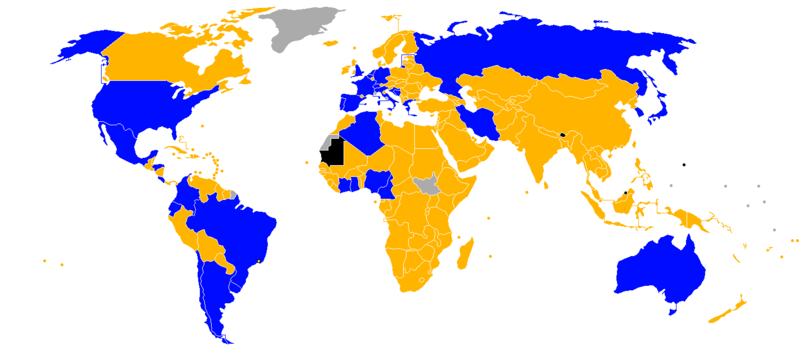
It’s time for another survey of the landscape of World Cup qualifying. First, let’s have a look at the map (courtesy Wikipedia):

Since we last left off, we’ve had a whole mess of qualifying. I’ve fully updated the massive table of all the teams, as well as the AFC and CONCACAF pages. New is the massive, poorly drawn-out image that attempts to capture the entire process. I think it provides a good visual idea of why I almost like qualifying as much as the World Cup itself. Since we last talked, 8 teams have been eliminated, so let’s focus on those ten.

Four of the eliminated teams were from the last day of the AFC Third Round. Bahrain had the most interesting day, by which I mean that a lot of folks thought there were some shenanigans as they were awarded two penalties en route to a 10-0 rout of Indonesia, which coincidentally was the number of goals they needed to score to make up their goal differential issues. It ended up not mattering, though, as Iran and Qatar drew 2-2, eliminating Bahrain anyway. Kuwait, meanwhile, failed to beat South Korea and were so eliminated. Saudi Arabia lost 4-2 to Australia and Oman beat Thailand 2-0, settling second place in their group in Oman’s favor and eliminating the Saudis and Thailand.

The other four were at the OFC Nations Cup, which doubled as the OFC’s second round of qualifying. Samoa, Vanuatu, Fiji, and Papua New Guinea were all eliminated. Probably the most surprising result from that tournament is that in the playoff rounds New Zealand actually lost to New Caledonia, allowing Tahiti to win the tournament and thus represent the OFC at the 2013 Confederations Cup. The Kiwis will have a shot at revenge when the OFC Third Round begins in September.

So what do we have to look forward to in September? Well, almost everything except for African qualifying. However, at this time no one is poised to be eliminated. In fact, the only confederation whose current round will wrap up this year is CONCACAF, which will have its third round wrapped up by the end of October.

That’s about it for now. Hopefully I’ll have time to update after the action in September but before the games in October.

If I Were on the Selection Committee

Editor’s note: So I had this big long post in process when I realized that I was handily beaten to the punch by several people with a better idea of they’re talking about. So I’ll link to one such example here: http://www.sbnation.com/ncaa-football/2012/6/21/3105594/college-football-playoffs-selection-committee and then just post what I originally wrote below.

So everyone and their brother by now knows that college football will, in two years, begin using a 4-team, seeded playoff with teams and seeds chosen by a selection committee. The committee will prioritize won-loss record, strength of schedule, head-to-head records, and whether a team is a conference champion.

We don’t currently know who is going to be on the committee. But if they asked me, I would’ve picked the following teams.

2011
Let’s start with this past year. LSU, Oklahoma State, and Oregon are all locks to be in. But we’re already at our first conundrum. Using last year’s BCS standings as a guide, we have to go all the way to the 10th place team, Wisconsin, to get another conference champion. Within the top 5, we even have three teams that already lost to other teams in the top 5 (Alabama, Oregon, and Stanford). Likely overwhelming conventional wisdom would favor Alabama once again. I would tweak the matchups slightly to avoid rematches, so LSU would face Oklahoma State and Alabama would play Oregon in the first round.
On the outside looking in: also known as “if they had more than four teams, who would be next?” Really, I sort of feel this field is weak as is, since LSU already beat two of the other teams in the playoff. I would probably extend Wisconsin an invite as Big Ten champion. Outside of that, it’s hard to say without including other teams that lost to teams that are already in, like Stanford and Arkansas. Does Boise sneak in? If they hadn’t lost to TCU, they would’ve been right on the bubble, but as-is it’s hard to even say they’re in the next four due to their schedule.

2010
In 2010, Auburn and Oregon are obvious choices. TCU’s undefeated romp is also rewarded, however. Again, who’s the fourth? The Big Ten had a 3-way tie between Wisconsin, Ohio State, and Michigan State. Wisconsin rose highest in the rankings, likely due to them having the foresight to lose before the other two teams. But with only four teams, that’s the system we have, and so the Badgers get the coveted fourth spot.
On the outside looking in: Where to start? Stanford was pretty good that year and 5th in the polls, so they would likely be strong candidates. Then there’s the other two teams in the Big Ten tie – if you include one, then at that point you pretty much have to include the other.

2009
There were five undefeated teams in 2009: Alabama, Texas, Cincinnati, TCU, and Boise State. With won-loss records the #1 priority for the committee, surely the couldn’t leave an undefeated out in this scenario, could they? Even though they lack a signature victory, the Bearcats’s strength of schedule is probably slightly better than TCU’s or Boise’s, so they get in. From there, Boise’s signature win against Oregon pays-off in terms of four-seed.
On the outside looking in: Boise, for starters. Florida then as the only major conference 1-loss team. Then there’s a succession of 2-loss major conference champions: Oregon, Ohio State, and Georgia Tech. The last of which makes me even more retroactively depressed about those losses to Miami and UGA. Oh, well, and the fact that I guess in retrospect none of it would’ve matter anyway due to having to vacate our ACC title. Whoops.

2008
The apocalypse, basically. Utah and Boise State were the only undefeated teams, parked all the way at #6 and #9 in the BCS standings. There were 8 other teams in the top 10 with 1-loss records, including that wacky 3-way tie in the Big 12 South between Oklahoma, Texas, and Texas Tech. At this point, I’m nearly tempted to just say “screw it” and take the top four conference champions: Oklahoma, Florida, USC, and Utah.
On the outside looking in: Screw 8 teams, we probably would’ve needed 16 to settle all the arguments 2008 would’ve generated. Texas and Alabama are almost certainly in, as well as Penn State. Do we eschew/screw over Texas Tech, or go with Boise State at this point?

2007
Remember Bizarro Year? You know, the year that started with Michigan playing a DI-AA team for the first time ever and then losing? The top 10 is a bloodbath, with only two major conference 1-loss teams (Ohio State and Kansas – yes, Kansas, like I said, it was Bizarro Year). That said, we have 4 major conference champions right at the top, so we’ll go with Ohio State, LSU, Virginia Tech, and Oklahoma.
On the outside looking in: Remember Hawaii? Yeah, they were undefeated in 2007. There are bunch of other major conference teams with two losses (and, yes, Kansas) but frankly I don’t feel like any of them had any really strong arguments for inclusion this year over the top 4.

A Look at the 50 Largest Cities in the US

One thing I’ve always found interesting is the representation of various geographical areas in the major professional sports in the US. For this discussion, I’ll include not only the Big Four (NFL, MLB, NBA, NHL), but also the MLS as it has gained a major foothold in the Pacific Northwest (minor league teams, generally, don’t average 30,000 fans to their home games).

For instance, the oldest American sports leagues, MLB and the NFL, are to this day still tied mostly to the Northeast and Midwest. For instance, in today’s NFL the chance of a bunch of guys getting together and locating a team in a city the of Green Bay, Wisconsin is basically zero. But with a limited home game schedule, the NFL can get away with using football as a regional draw (which also explains why college football is huge in the Southeast, which did not see major professional sports until the Braves moved to Atlanta in 1966).

Below is a table of the 49 largest “population centers” in the US. I basically made that term up, but it rolls off the tongue better than “Primary Combined Statistical Area”, which is what the Census calls them. I specifically went with that metric because it will combine what are considered separate Metropolitan Statistical Areas in close geographical proximity. To use an example: the San Jose-San Francisco-Oakland Combined Statistical Area is actually two separate MSAs: San Francisco-Oakland-Fremont and San Jose-Sunnyvale-Santa Clara. While local residents would quickly call the latter the “South Bay”, the whole region is intertwined and known as the “Bay Area”, especially for sports. This table from Wikipedia is my source, and their source are the 2011 Census Estimates.

PCSA Population (2011) NFL MLB NBA NHL MLS
New York-Newark-Bridgeport 22,214,083 New York Giants (East Rutherford, NJ)
New York Jets (East Rutherford, NJ)
New York Yankees
New York Mets
Brooklyn Nets
New York Knicks
New Jersey Devils (Newark)
New York Islanders (Uniondale, NY)
New York Rangers
New York Red Bulls (Harrison, NJ)
Los Angeles-Long Beach-Riverside 18,081,569 None Los Angeles Dodgers
Los Angeles Angels of Anaheim
Los Angeles Clippers
Los Angeles Lakers
Anaheim Ducks
Los Angeles Kings
Chivas USA (Carson, CA)
Los Angeles Galaxy (Carson, CA)
Chicago-Naperville-Michigan City 9,729,825 Chicago Bears Chicago Cubs
Chicago White Sox
Chicago Bulls Chicago Blackhawks Chicago Fire (Bridgeview, IL)
Washington-Baltimore-Northern Virginia 8,718,083 Baltimore Ravens
Washington Redskins
Baltimore Orioles
Washington Nationals
Washington Wizards Washington Capitals D.C. United
Boston-Worcester-Manchester 7,601,061 New England Patriots (Foxborough, MA) Boston Red Sox Boston Celtics Boston Bruins New England Revolution (Foxborough, MA)
San Jose-San Francisco-Oakland 7,563,460 Oakland Raiders
San Francisco 49ers
Oakland Athletics
San Francisco Giants
Golden State Warriors (Oakland, CA) San Jose Sharks San Jose Earthquakes
Dallas-Fort Worth 6,887,383 Dallas Cowboys Texas Rangers (Arlington, TX) Dallas Mavericks Dallas Stars FC Dallas
Philadelphia-Camden-Vineland 6,562,287 Philadelphia Eagles Philadelphia Phillies Philadelphia 76ers Philadelphia Flyers Philadelphia Union (Chester, PA)
Houston-Baytown-Huntsville 6,191,434 Houston Texans Houston Astros Houston Rockets None Houston Dynamo
Atlanta-Sandy Springs-Gainesville 5,712,148 Atlanta Falcons Atlanta Braves Atlanta Hawks None None
Miami-Fort Lauderdale-Pompano Beach 5,670,125 Miami Dolphins Miami Marlins Miami Heat Florida Panthers (Sunrise, FL) None
Detroit-Warren-Flint 5,207,434 Detroit Lions Detroit Tigers Detroit Pistons Detroit Red Wings None
Seattle-Tacoma-Olympia 4,269,349 Seattle Seahawks Seattle Mariners None None Seattle Sounders
Phoenix-Mesa-Glendale 4,263,236 Arizona Cardinals (Glendale, AZ) Arizona Diamondbacks (Phoenix, AZ) Phoenix Suns Phoenix Coyotes (Glendale, AZ) None
Minneapolis-St. Paul-St. Cloud 3,655,558 Minnesota Vikings (Minneapolis, MN) Minnesota Twins (Minneapolis, MN) Minnesota Timberwolves (Minneapolis, MN) Minnesota Wild (St. Paul, MN) None
Denver-Aurora-Boulder 3,157,520 Denver Broncos Colorado Rockies (Denver, CO) Denver Nuggets Colorado Avalanche (Denver, CO) Colorado Rapids (Commerce City, CO)
San Diego-Carlsbad-San Marcos 3,140,069 San Diego Chargers San Diego Padres None None None
St. Louis-St. Charles-Farmington 2,882,932 St. Louis Rams St. Louis Cardinals None St. Louis Blues None
Cleveland-Akron-Elyria 2,871,084 Cleveland Browns Cleveland Indians Cleveland Cavaliers None None
Orlando-Deltona-Daytona Beach 2,861,296 None None Orlando Magic None None
Tampa-St. Petersburg-Clearwater 2,824,724 Tampa Bay Buccaneers Tampa Bay Rays (St. Petersburg, FL) None Tampa Bay Lightning None
Sacramento-Arden Arcade-Yuba City 2,489,230 None None Sacramento Kings None None
Pittsburgh-New Castle 2,450,281 Pittsburgh Steelers Pittsburgh Pirates None Pittsburgh Penguins None
Charlotte-Gastonia-Salisbury 2,442,564 Carolina Panthers (Charlotte, NC) None Charlotte Bobcats None None
Portland-Vancouver-Hillsboro 2,262,605 None None Portland Trail Blazers None Portland Timbers
San Antonio-New Braunfels 2,194,927 None None San Antonio Spurs None None
Cincinnati-Middletown-Wilimington 2,179,965 Cincinnati Bengals Cincinnati Reds None None Columbus Crew
Kansas City-Overland Park-Kansas City 2,122,908 Kansas City Chiefs Kansas City Royals None None Sporting Kansas City
Indianapolis-Anderson-Columbus 2,103,574 Indianapolis Colts None Indiana Pacers (Indianapolis, IN) None None
Columbus-Marion-Chillicothe 2,093,185 None None None Columbus Blue Jackets Columbus Crew
Las Vegas-Paradise-Pahrump 2,013,326 None None None None None
Austin-Round Rock-Marble Falls 1,826,636 None None None None None
Religh-Durham-Cary 1,795,750 None None None Carolina Hurricanes (Raleigh, NC) None
Salt Lake City-Ogden-Clearfield 1,776,528 None None Utah Jazz (Salt Lake City, UT) None Real Salt Lake
Milwaukee-Racine-Waukesha 1,757,604 None Milwaukee Brewers Milwaukee Bucks None None
Nashville-Davdison-Murfeesboro-Columbia 1,698,651 Tennessee Titans (Nashville, TN) None None Nashville Predators None
Virginia Beach-Norfolk-Newport News 1,679,894 None None None None None
Grenesboro-Winston-Salem-High Point 1,602,693 None None None None None
Louisville/Jefferson County-Elizabethtown-Scottsburg 1,440,607 None None None None None
Jacksonville 1,360,251 Jacksonville Jaguars None None None None
Oklahoma City-Shawnee 1,348,333 None None Oklahoma City Thunder None None
Hartford-West Hartford-Willimantic 1,331,406 None None None None None
Grand Rapids-Muskegon-Holland 1,328,440 None None None None None
Memphis 1,328,440 None None Memphis Grizzlies None None
Greenville-Spartanburgh-Anderson 1,281,394 None None None None None
Richmond 1,269,380 None None None None None
New Orleans-Metaire-Bogalusa 1,238,228 New Orleans Saints None New Orleans Hornets None None
Buffalo-Niagara-Cattaraugus 1,213,871 Buffalo Bills None None Buffalo Sabres None
Birmingham-Hoover-Cullman 1,212,800 None None None None None

Apologies to Washington, D.C. and Baltimore, which was the only area on the list that I felt like could have been separated. As it is, we can gather some interesting observations:

  • As everyone knows, Los Angeles does not have a NFL team.
  • Orlando is the largest market without a baseball team. Though it’s worth noting the only league represented there is the NBA.
  • Green Bay, as the 138th largest such area, is the only American city represented in any of the major sports leagues that isn’t on this list. 
  • The largest city on the list with no major professional sports teams is Las Vegas. This isn’t surprising, given that the leagues seem eager to avoid any potential stigma they could have thrown at them by being associated with Vegas. 
  • I don’t really know why Nashville and Raleigh have hockey teams.
  • Note that the numbers for Buffalo don’t include any population over the border in Canada.
  • New Orleans, the other small multi-sport city on this list, used to be slightly larger, at 1,360,346 in 2000 (the city proper took an even larger hit, with its populating decreasing 29.1% percent between 2000 and 2010). 
  • The NFL’s expansion in the South definitely seemed to capitalize on the idea of making it a more regional sport, considering Nashville and Jacksonville’s locations on this list. I’d say that’s currently working slightly better in the former than the latter.
  • Where would you threaten to move to today if you were a baseball owner trying to extort a new stadium from your fans? Other places were named in the past, but Washington, D.C. had to have always been the most serious candidate. Orlando is not a target, and it’s too close to Tampa anyway. Portland used to be thrown around in the past, but it never made sense to me. What would make sense to me is to put a team in the Jersey part of the New York area, but the chances of that happening are basically zero.
  • The fact that there are no professional basketball teams in Missouri strikes me as a bit odd, especially considering some of the places there are NBA teams.
  • Then again, perhaps some of the “odd” NBA and NHL locations are attempts to capitalize on being the only game in town when it comes to major sports.
  • There are currently no MLS teams south of D.C. or east of Houston, though I believe they’re thinking about a team in Miami or Atlanta.
  • Virginia is the largest state without any major professional sports teams. (In fairness, the most populated region of the state is the metropolitan Washington, D.C. area.)